“12 is the new 5”: private equity’s shift from structure to substance



“12 is the new 5”: private equity’s shift from structure to substance

The excess of 2021/22 masked how much of the industry’s performance depended on leverage, multiple expansion, and abundant liquidity. That model has not entirely collapsed, but it does not clear as much as it used to. What is emerging instead is a more selective market, where capital is available but conditional, and where returns depend more on execution.
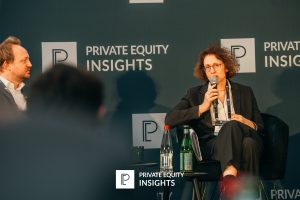
The shift is visible especially in exits. In a panel discussion at the Private Equity Insights Conference in Paris, Mounia Chaoui-Roulleau, Managing Partner at Turenne Groupe, described 2025 as the point when “some assets were unable to find a buyer.” That marked the moment when the market began to differentiate more aggressively between assets that could still command attention and those that could not.
The divide has since widened, despite initial optimism at the beginning of 2026. At the moment, strong, cash-generative businesses continue to transact at resilient valuations, while weaker assets struggle to sell at any price. This is not simply a valuation issue. It is a liquidity filter. Nathalie Chollet of the European Investment Fund described distributions as “quite polarised,” with activity concentrated at the lower end of the market where assets can still be integrated into larger platforms. The implication is that liquidity has become very selective as a result.
Continuation vehicles now sit at the centre of this shift as a structural tool. Chollet noted that “we do see them a lot… [but] some abuse [exists] to artificially increase the DPI,” reflecting growing LP concern that liquidity is being engineered rather than realised. Chaoui-Roulleau offered a more pragmatic view. Continuation funds are a way “to protect […] trophy assets” – allowing GPs to retain high-quality companies they know well. The problem is that what works for GPs as portfolio management can work against LP expectations of genuine exits.
This is where the industry’s reset becomes most visible. The old playbook assumed that time, leverage, and market expansion would deliver returns. That assumption no longer holds. As Chaoui-Roulleau put it, “we are no longer in a situation where the EBITDA multiples have a chance to continue to increase.” In practical terms, what used to be enough is no longer enough. Where 5% EBITDA growth could once support an investment case, the bar has shifted materially higher, with 12% replacing the old 5%, according to Bain & Company.
Hence, value creation has moved inside the company. “You need to be hands-on. You need to create EBITDA growth in the companies,” added Renaud Tourmente, Deputy-CEO of Armen. The emphasis is on operational involvement, not so much on purely financial structuring. Selection, partnership, and execution – long regarded as core to private equity – are now being tested in practice.
At the same time, managers are being evaluated on their ability to build businesses. Sector expertise, networks, and operational support are prerequisites to building resilient assets capable of generating returns for LPs. CEOs, Chaoui-Roulleau noted, are actively seeking investors who can “help them on the day-to-day,” reflecting a more demanding relationship between capital and management.
Artificial intelligence, the hottest topic around, also plays a part in this transition. Chollet framed AI as “an opportunity rather than a threat,” particularly in driving sales and accelerating product development. The key is enhancing productivity and enabling portfolio companies to generate organic growth in a market where external tailwinds have weakened.
Chaoui-Roulleau echoed that view, describing AI as “a fantastic opportunity,” but also warning that it raises the bar. Firms that fail to integrate it into operations risk falling behind not because of technology, but because of execution.
What emerges from all of this is not a fragmented market, but a more disciplined one.
Is “12 the new 5?” Maybe. But private equity is certainly turning more operational. Capital has returned, but it is selective. Liquidity exists, but it is conditional. Growth is possible, but it must be built.
by Andreea Melinti
If you think we missed any important news, please do not hesitate to contact us at [email protected].
Can`t stop reading? Read more.