
Private equity firms are drawing political fire on the campaign trail and on Capitol Hill, where lawmakers on Tuesday sparred over whether new rules are needed to contend with the investment vehicles’ growing role in the U.S. economy.
Buyout firms managed as much as $7 trillion in assets at the end of 2018, up from $1 trillion during the 2008 financial crisis, according to a memo prepared by staff for the Democratic-majority House Committee on Financial Services. The committee is considering proposed legislation that would hold PE funds and their investors liable for debts incurred by the companies they acquire.
PE fund investments run the gamut — from retail stores and hospitals to private fire departments and makers of voting machines — so their impact is widespread. Much of that impact benefits the U.S. economy and American workers, according to Drew Maloney, president and CEO of the American Investment Council, which represents private equity firms.
“Our industry creates jobs, powers the economy and strengthens the retirements of millions of Americans,” Maloney said in prepared remarks.
Goal is “build a better business”
The goal of all private equity investments is to “build a better business,” Maloney said, adding that private equity invested $685 billion in more than 4,700 businesses across the U.S. in 2018.
Smaller PE funds typically acquire small and midsize companies that can benefit from the financing and operational improvements that buyout executives can provide, agreed Eileen Appelbaum, co-director of the Center for Economic and Policy Research. The trouble, she told lawmakers Tuesday, is the PE mega-funds where the bulk of private equity flows.
“Both private equity and hedge funds charge investors high management fees without providing them with transparency or control of the fund’s activities, typically take 20% of the profit [off investments], and finance their operations with high levels of borrowing that feed a growing market for risky, junk-bond corporate debt that is reaching dangerous levels,” Appelbaum said.
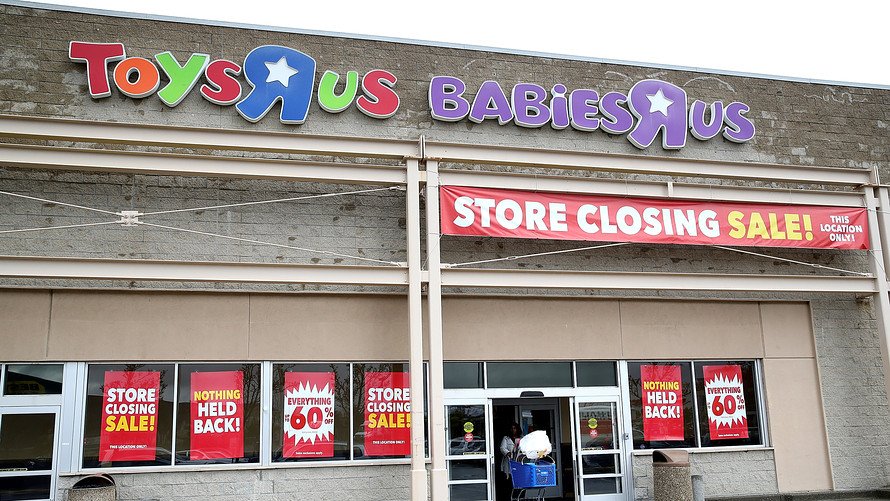
Such a scenario arguably was in play at bankrupt Toys R Us, purchased for $6.6 billion by PE firms KKR, Bain Capital and Vornado, which used $5 billion of debt to finance the deal, yet only the retail chain was liable for paying it back.
“Toys R Us had a decades-long severance policy — a week of pay for every year of service to the company. But when our company liquidated, the employees were left with nothing,” Giovanna De La Rosa, who worked for the retailer for 20 years and is now a leader in the workers’ advocacy group United for Respect, told lawmakers Tuesday. “My coworkers and I were left with nothing while the executives and private equity owners walked away with millions.”
While Toys R Us is often described as the poster child for what can go wrong, a slew of PE-owned retail chains have closed shop in recent years and laid off thousands of workers: Shopko (owned by Sun Capital); Payless ShoeSource (Alden Global Capital and Invesco); Gymboree (Bain); Sports Authority (Leonard Green); Mervins Department Store (Cerberus Capital Management), among others.
“Legalized looting”
White House hopefuls Elizabeth Warren and Bernie Sanders are among those calling for new regulations on the PE industry, pitching constraints on what Warren terms “legalized looting” by investment firms that take over troubled companies.
“[F]ar too often, the private equity firms are like vampires — bleeding the company dry and walking away enriched even as the company succumbs,” the Massachusetts senator wrote in a Medium post in July.
One such case in point — the recent closure of 171-year-old Hahnemann University Hospital in Philadelphia after its purchase by private equity firm Paladin Healthcare. As Appelbaum relayed to lawmakers on Tuesday, “They didn’t lift a finger to do anything to turn around a troubled hospital,” she said.
Source: CBS News
Can’t stop reading? Read more

Valuation differences halt EQT’s Oxford Biomedica takeover push
Valuation differences halt EQT’s Oxford Biomedica takeover push EQT has opted not to proceed with a takeover offer for Oxford Biomedica after the British cell and gene therapy manufacturer rejected four separate proposals, Reuters reported. Oxford Biomedica confirmed...

Novacap closes $3.8bn Tech Fund VII, surpassing target by over $1bn
Novacap closes $3.8bn Tech Fund VII, surpassing target by over $1bn Novacap has closed its Technologies Fund VII at nearly $3.8bn, exceeding its $2.75bn target by more than $1bn in under a year, the firm announced. The vehicle marks Novacap’s largest fund to date and...

L Catterton partner Todd Bartee takes helm at Tonal as private equity reshapes connected fitness
L Catterton partner Todd Bartee takes helm at Tonal as private equity reshapes connected fitness L Catterton has strengthened its operational oversight at portfolio company Tonal by appointing Operating Partner Todd Bartee as Chief Executive Officer. Bartee succeeds...