
With Uber and WeWork struggling, are VCs really better than hedge funds at picking winners?
Investors are questioning how good the world’s most prominent venture capital fund is at picking winners. Doubts about the Vision Fund, the flagship investment vehicle for Masayoshi Son’s SoftBank Group Corp., intensified after the collapse of the planned $20 billion WeWork Cos. initial public offering, but they’d been floating around for a while.
SoftBank’s bad year began in May with Uber Technologies Inc.’s disappointing IPO and continued when Slack Technologies Inc.’s June direct listing on the New York Stock Exchange failed to impress. By September the fund was up $11.4 billion on $76.3 billion in investments deployed over two years, according to its Nov. 8 investor briefing. But a big chunk of that came from just two deals: the August 2018 sale of Flipkart Online Services Pvt Ltd. to Walmart Inc. and some well-timed trades in chipmaker Nvidia Corp., which it exited in January.
As for the rest of the fund’s investments, only consumer stocks, which account for 20% of its portfolio, have reported decent gains. Fifty percent of the Vision Fund’s holdings are in transportation logistics and real estate, making it a poor hedge against market volatility. After taking writedowns on Uber and WeWork, it’s already in the red for both sectors.
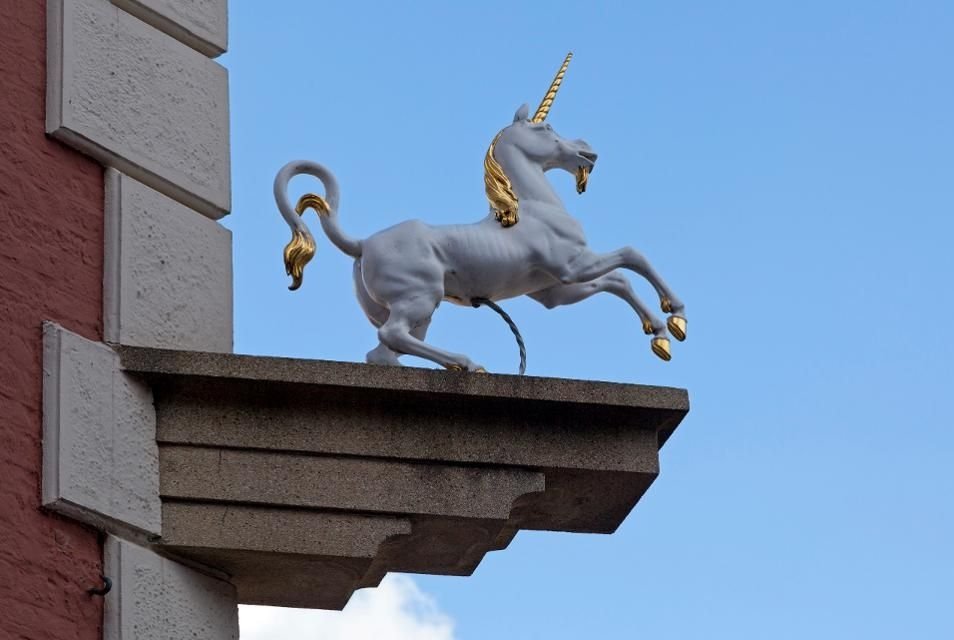
Here’s a provocative question: What if hedge funds—passive but nimble investors—are better at identifying unicorns than venture capital is? Unlike Son, who has a habit of writing multimillion-dollar checks after only 10 minutes of getting-to-know-you time, hedge fund managers are all about due diligence. Tiger Global Management’s assets, for example, have swelled 80% since May 2015, including big gains in the past 12 months from Juul Labs Inc.’s $12.8 billion deal with Altria Group Inc. and the market debut of Peloton Interactive Inc., which Tiger has backed since 2014.
Son has survived tricky times before. During the dot-com bust, SoftBank’s shares tumbled 99%. But the company stayed around because one of its investments—in Alibaba Group Holding Ltd.—paid off spectacularly. Perhaps Son will hit the jackpot again. But a few standout deals don’t make him a great startup picker. In fact, retail investors would do better not to follow his lead. Based on his past success rate, most of the unicorns the Vision Fund brings to market will be flops.
Source: Bloomberg
Can’t stop reading? Read more

Arlington Capital agrees $1bn J&J Worldwide Services sale to CBRE
Arlington Capital Partners (Arlington), a private investment firm specialising in government regulated industries, has agreed to sell J&J Worldwide Services (J&J), a provider of essential, preventative property maintenance activities to the US Federal...

Charlesbank commits $250m to Rise Growth Partners
According to a press release, the capital from Charlesbank and Rise’s management combined will go towards the acquisition of significant minority stakes in select RIA firms. Rise will focus on high-growth RIAs with AUM between $1bn to more than $5bn. Following...
Morgan Stanley plans to double private credit portfolio to $50bn
Morgan Stanley's asset management division aims to double its private credit portfolio to $50 billion in the medium term as it gathers funds from large investors to loan out to companies. The bank has invested more than $300 million into the business, which has...